Thursday, June 2, 2011

Can We Recover Lost Skills?

Many years ago, I found my great-grandmother's old sewing basket. Inside were various items she had used, but the one that intrigued me the most was snippets of lace she had tatted along with her tatting shuttle. At the time I was curious to learn this skill and I sought out the older women at church (most were about 75 -80 years old at the time) thinking surely they would know how to tat. (Keep in mind that there was no internet at this time and living in a small town left few other resources to seek out on the subject.) I was shocked to find that not one single woman knew how to tat! Oh, they remembered their mothers doing it, but they confessed they had never learned how.


The more I homestead, the more I realize how many skills we've really lost in the last couple of generations. And it can seem overwhelming at moments. Especially when things on the homestead aren't going very well. Now would be a good time to reflect and consider if we can really recover what we've lost.


Photo Credit


Some of you may be thinking, what's the big deal? Why do we need to recover homesteading skills such as gardening, canning, fermentation, dehydrating, sewing, and so on, when we can go to the store and get food and dry goods from anywhere in the world and often at a cheaper price? Why have chickens, goats, cows, bees, and any other animal when all that they produce can be picked up at the local market with less time and effort? Who needs to know how to use medicinal herbs, midwife skills, or first aid since even small towns have doctors? Who has time to learn all this and do it?


Technology is a wonderful thing. It has brought us all together and serves to pass along some of this valuable information. But such a system is extremely fragile and one little glitch can cause the whole thing to topple. What's the old saying? "The bigger the ________, the bigger the fall" (fill in the blank with whatever you like!). 


Technology is like putting all your eggs in one basket. Homesteading is more like spreading it around.


Technology is mostly global. Homesteading is mostly local (the benefit of which would make things easier to obtain if necessary through bartering, etc.)


Technology is not very people oriented. Homesteading is very people oriented.


Both require the "user" to rely on something other than just themselves, and God is the one who allows for both in His economy, but since He originally established the concept of "living off the land", I'll go out on a limb here and say I think He kind of likes this model. (Since my purpose here is not to write a post on why Homesteading is so great, I'm going to leave this part of the discussion and move back to the point: Can we recover lost skills? For more on the why, please read my post "Why Do You Homestead?".)


Photo Credit


So, can we recover the many skills lost in the last two generations? I've wondered a lot about it the last couple of weeks. And honestly, I'm not sure one generation can learn it all. There's just so much to absorb! 


Raising chickens is fairly simple and an excellent place to start. Beekeeping is not. Gardening? That depends. But if you want to raise organic produce with a high nutrient content despite weather conditions and pest infestations, it's going to take some time. You can't expect to have a bumper crop of everything you plant each year. Learning to can pickles is fun and not overly challenging. However, learning to ferment pickles is much trickier. You get the point.
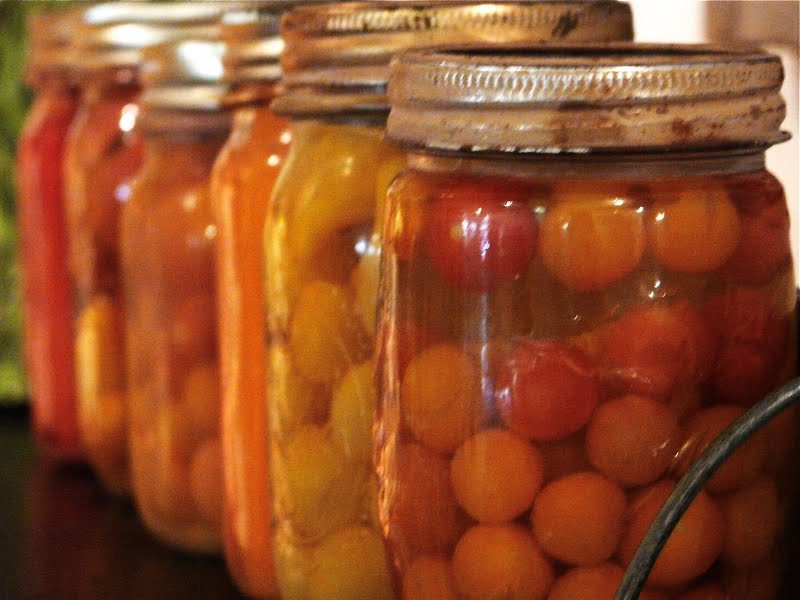

Photo Credit


Here's a few bullet point thoughts that might answer the question at hand...


Recovering Lost Skills


• Looking ahead to a goal is a must, but at some point, we need to be able to step back and look at what we've already learned and be encouraged. With each skill gained we have reclaimed some lost ground. 


• We need to realize that as each year comes and goes, we've learned to deal with a few "what ifs" in regards to what we think we already know. In other words, while raising chickens is pretty basic and easy, little things come up in regards to poultry over a long period of time which a person learns to address through book knowledge and hands on experience.


• Sometimes it's better to learn one skill really well rather than several skills with a cursory level of knowledge. If one ever needs to barter, being an expert on a subject will allow you to be in high demand for your skill.


• We didn't lose these skills overnight. We won't gain them back overnight. 


Photo Credit


• Having one big goal a year is good. Or just a few smaller goals. Having too many may become overwhelming.


• God is a god of order, patience, and time. If we're feeling rushed to learn everything at once, it's probably not God's plan, but our own. Remember the story of the Tortoise and the Hare! Slow and steady wins the race!


• We need to keep an eye to the future as a long term perspective, teaching what we've learned to our children. And it's more important that we do so with a winsome attitude, helping them to love homesteading rather than making it a burden so they grow up wanting to homestead! That's not to say they'll love everything about it or that work is always fun, but we should seek to help each child find things that appeal to him or her as well as making the process enjoyable as possible. 


• Think in terms of a lifestyle change. Something that you will do from now on, making it a part of your everyday life. And talk about it to your children! Think of the principal from Deuteronomy 6 where you teach as you go about your day in everything you do.


• Do not be discouraged if the younger generation doesn't get as excited as you are. When we were in our teens and twenties, most of us did not appreciate these things either (but there are always exceptions). Not until we were often older... and wiser... and more humble. Do not grow weary passing on skills to your children and whoever else will listen. In time, they very well may return to the lessons you tried to impart. 


Photo Credit


Can we recover lost skills? Yes, most certainly. Can we recover them all in one generation? Perhaps not. But we will have been a part of a new generation of pioneers who set in motion a revival that could spread over time, reclaiming that which was once lost. We will have given the next generation a precious gift and it will be their turn to carry the torch.


43 comments:

  1. Wonderful post. I was just feeling a bit overwhelmed and your post hit the spot.
    Hugs
    Granny Trace
    www.grannytracescrapsandsquares.com

    ReplyDelete
  2. A very nice post. We too are trying to learn some of these skills although I haven't been successful at all of them. Since I work in town, for a world wide company, most of the people think it's odd that we are tapping our trees, curing our own meats, learning to quilt, canning and thinking of raising goats. In my mind it's interesting plus who knows, what if someday I can't just hop in the car and drive to the store for my every need.

    I'm still trying to figure out the spinning wheel. I have llama wool but I think I must be doing something wrong or it is just too silky. I can't seem to make yarn.

    ReplyDelete
  3. Love this! So true!!! Awesome post! Makes me want to get my list back out and start planning for my next *learning experience!* ;D--S

    ReplyDelete
  4. A very well written post.. Full of truths and well worth reflecting on..And putting into practice...
    Thank you..

    ReplyDelete
  5. I so agree. My hubby and I are not affraid to try anything. We get ideas from grandparents, great grandparents and Aunts and Uncles. The knowledge of how to do these skills is dying out with them. They are the resouces we need to be turning to.
    Great post
    God Bless

    ReplyDelete
  6. Yes, we can absolutely regain lost skills....unfortunately, I think hard times are generally the impetus we need to relearn them. When times are good, money is easy, commodities are cheap, it's so easy just to run down to the store and pick up what we need. And times have been good for, what, the past 5 decades, give or take? It's so easy to become spoiled and the little conveniences become necessities and now the times are changing again and we have several generations who don't know how to sew on a button or cook without a microwave.

    I'll be honest with you, I'm quite nervous about the coming year. I think it's a 'perfect storm' scenario...with high unemployment, inflation, high oil prices. Throw in the fact that most of the midwest is underwater and crops aren't being planted, I just don't see how this can turn out well.

    ReplyDelete
  7. Luckily, we do have access to older books, and that can fill in some gaps when we're lacking knowledgeable people. Plus there's always the SCA - everywhere I turn, when I ask people about an old skill, they tell me, "Oh, I know someone in the SCA who does that."

    I agree with you that it's important to keep old skills alive, for the most part.

    ReplyDelete
  8. I was thinking about this very thing yesterday! So many things that used to be done...sewing, gardening, canning, woodwork, etc are all being dropped by the wayside. I am just as guilty as anyone else. I can sew some but not very well (I do have a machine). Thanks for bringing this subject to light!

    ReplyDelete
  9. A wonderful post and soo true ! We say here( The bigger he is the harder he falls !) thats our phrase lol I envy the Amish for never changing and staying with their ways and not letting the modern world come between them and their beliefs ! We have lots of Amish here and its wonderful ! Love your photos ! Have a good day !

    ReplyDelete
  10. Thank you for writing this post I really enjoyed it! I am 25 years old and I love the whole aspect of learning homesteading skills and someday having a homestead in the country. :)
    This is a great post!

    ~katie

    ReplyDelete
  11. Thought-provoking post, Amy. I find that for myself, striking a balance and prioritizing is important. I could continue to add new (old:-)) skill after skill over time, but then all my time would be taken up and I wouldn't have any time to live this life now in service to others (volunteering, etc.). My time already feels cramped. I like your point about choosing a few skills and learning them well. If we all did that we could come together as neighbors to support each other if the need arose and in the meantime look after our *other* neighbors as well.

    Sorry for my rambling. As always, I love your posts:-). Keep up the good work.

    ReplyDelete
  12. There are so many lost skills out there which is so sad. I remember reading about tatting and how beautiful it looked when I was back in my teens and twenties. I never did learn it although I do know how to crochet. My daughter is finally getting interested in flowers and a little gardening. I guess after all of those years of listening to me some of it is sinking in!
    The saddest thing is that they are talking about no longer teaching cursive writing in schools. No that is sad!

    ReplyDelete
  13. I totally agree with you, we have lost so much knowledge from the older generation. I am constantly researching such things as finding what different herbs are for, soap making, knitting...etc.. I am keeping my niece this summer she is 12, and she loves learning all the things about being a homemaker so we have planned on learning how to make soap....I will let you know how that works out!
    have a blessed day,
    Regina

    ReplyDelete
  14. We most certainly can! In my teens, I chose to home-school for high school and ended up getting to design many of my own courses. I very purposefully designed my studies to include the "forgotten arts" and what seemed like side interest has become such a vital part of my life.

    Now that I am almost 30, it is amazing to see more and more people discovering their own interests in the same things. I must say it gives me such a sense of hope and love for humanity.

    Thanks for such a wonderful post!

    ReplyDelete
  15. You are so right. Many skills have been lost, especially here in the US. We've become a very lazy society. It's amazing how many people I work with don't know how to be creative, or would be able to survive if we had something drastic happen to our country. It's sad.

    ReplyDelete
  16. Love this post!! Teaching our children these things (and therefore, having to learn many of them myself as well) is SO important to my husband and I. Not only so they know them just to know them, but also because we are really such a lazy society and I want them to learn how satisfying and rewarding a hard-working life can be. At least I've got many a Proverb to back me up. LOL

    ReplyDelete
  17. I so hope we can recover these skills, as we are working so hard to do that.
    It calls to mind Jeremiah 6:16.

    ReplyDelete
  18. Wonderful post. My grandmother canned all her life. Those skills were also in my mother, but I tried and never caught on just right. My other grandmother loved to knit .I can do that, but haven't in years. The skills we saw as a child are sometimes still there hidden behind the cobwebs and the dust. We just need to uncover them again.

    ReplyDelete
  19. It's quite overwhelming to think of all the knowledge and skills we've lost over the years. Convenience won over my grandparents...after years and years of hard work, convenience was too hard to pass up. Unfortunately...the next generations were deprived of learning even the simplest skills...canning, gardening, etc. I love hearing the stories of my grandparents making sausage and cheese and storing it in the cold cellar. And how my grandfather was in charge of soleing shoes and giving his siblings haircuts. Not to mention, patching the roof and foraging for mushrooms.

    I wish he'd shown me how to forage...and how to make sausages and cheese. Or at least that I'd shown an interest much earlier and asked them to show me how. Although I'm sure they would have said something along the lines of, "Why would you want to go to the trouble of MAKING it when we can just go BUY it?"

    Slowly but surely...and as a village...I think we'll be able to bring some of these things back.

    ReplyDelete
  20. The subject of tatting got me thinking of where would I go to find a how-to source. For me, it's the library. Tried the library system in 3 counties - turned up 2 books written in the 70s.

    Since I don't tat I thought of whatelse I can do and the resources available to me. I'm in my mid 60s and was taught to sew & mend, embroider, knit, crochet, cook & bake in my early years - gee I sound ancient but much was from the hippie years of 60s & 70s.

    Recently checked some books on quilting - none was for reusing materials from other sources like old clothes but for using new, coordinated fabric.
    Several quilters in the local paper bemoaned the rise in cotton prices saying it would curtail their quilting.
    Couldn't find anything on mending either. Asked about a darning egg at a local fabric store - got a bewildered look from the clerk and then why would you want to repair socks??

    Gardening, making repairs to household items like furniture, changing a flat tire, making toys, braided rugs, etc were all learned from my parents. Not particularly for the cost savings, altho that was pointed out, but because it was necessary to know - just in case. So, in college I was the go-to girl for fixing things - too bad I didn't charge, could have made a bundle.

    Anyway - I am now quite worried about the younger generations (my own DILs in their 30s and my grandkids who are under 10). They really don't know and don't want to know how to do things. They are absolutely computer literate and that they do know inside and out - but will it help them cope? A you-tube video is not the same as hands on experience.

    Too bad that more of us are not passing on the information and skills necessary, and becoming more necessary, to cope in today's world.

    ReplyDelete
  21. But we can recover them if we have the "want to." We can do it all by just getting a book at the library and starting to do it. I think having a person teach in person is good but just jumping in with both feet you learn lots with each experiment. Not to mention it is fun. :)

    ReplyDelete
  22. Wonderful post Amy. It's true that we have lost so much.

    ReplyDelete
  23. That is why it is SO important to preserve our history and the built environment around us. Sometimes buildings, tools, old books and the like are our only physical link to past ways of doing things. Archival sources and old texts are also extremely important in recovering this lost wisdom. Historic sites and living history muesuems help to ensure the preservation of and know-how of everyday activities the way our ancestors did them. We have so much to learn from them!!!!

    ReplyDelete
  24. I live a suburban life. We garden a bit, I knit, crochet, sew a bit.We would love to have fresh eggs from our own coop, just like fresh produce even a few months in the year. The thing that holds us back is that homesteading seems to take over the life. Goats and chickens are not pets that can be boarded when you travel. Whenever we have homesteading dreams we are afraid we may not be able to do things like travel a lot or leave at a moment's notice as there may not be people willing to care for chickens/goats or even know how. Is that a valid concern or am I over thinking it ?

    ReplyDelete
  25. Excellent post!! I have mulled over many of these issues over the years, and saving a dying art/craft was one of my motivations for learning to spin years ago.

    That one person probably cannot do it all is the hard lesson to learn. We all have limitations of one kind or another - space, time, age/strength/mobility, skill, and not the least - finances! I have deliberately chosen not to take up this craft or that new skill, because I have no more room for another 'stash' of supplies for some crafts, and my time/space/strength prevents me from 'farming' as extensively as I would choose. Well said that it is better to seek excellence in few skills, rather than cursory knowledge of many.

    That it makes me dependent in some areas makes me uncomfortable, but I believe, like you, that God would have us be INTERdependent on each other, and ultimately on Him.

    The skills and resources I can provide for others as well as myself, I trust God will put to good use, if the time comes.


    wste

    ReplyDelete
  26. Very thought provoking!
    I have a little list of skills I'm working on. But, it also reminded me about being diligent to teach my daughter specific skills. Our 'homestead' is so small and although we have 'grand plans' money and time don't always allow us to do what we'd like. However, I'm encouraged by your post that the homemaking skills I can do fairly 'cheap' and include my daughter in these wonderful skills!
    Thanks for the ENCOURAGEMENT~

    ReplyDelete
  27. Anonymous You asked if your concern for raising chickens/goats was valid since it would limit your ability to take off at a moment's notice in order to travel...

    You're absolutely correct. We no longer go far from home during the summer - perhaps for 2-3 days at the most - because we have an extensive garden to tend. I don't want to travel in Sept. or Oct. because I am harvesting everything at that point. Mid spring is busy as well getting the garden ready, raising chicks, etc. However, I've found like-minded friends in the community and we are starting to trade off when one of us has to go out of town.

    Is it worth it? For us, YES! But each person needs to consider what they can do and not do. Some animals require more attention (goats) and others less (chickens), so chose an animal that will fit your lifestyle to some degree. Beekeeping is more difficult than chickens, but you don't have to be in the hive every single day, so you might consider becoming urban beekeepers!

    ReplyDelete
  28. Great post Amy, recovering lost skills is so important. I am so glad our children are on this journey as well. Living in the suburbs you would think that relearning skills has its limits. Sometimes the limits are only limited in our minds. I really appreciate Mr. Bunker (Surviving Off Grid...) saying that this society has basically learned to think in parts and no longer in whole since we rely on technology or simply purchasing our food from a store. The rest of the brain atrophies, how sad is that, we are not using all of what our heavenly Father has given us. When you have time, check out my son's site http://abowyersjournal.blogspot.com/ . Not only is he making a bow from scratch, he's been wanting a utility knife for a long time and has decided to teach himself some blacksmithing (something he has been wanting to learn for a while as well) skills and is now making his own utility knife. When there is a will, there is a way (of course if God wills it). My parents came here from the old world after WW2 (France and Spain) thinking that things would be great/better. And now I'm in a race to make sure our children remember the ways of the old.
    many blessings! Carmen (pebble crossing)

    ReplyDelete
  29. Every year in my state, there is a big fair in August. A large part of the fairgrounds is reserved for people demonstrating the old skills, now largely lost. Things like making shakes for roofing, salting down pork, making clothes from bolts of cloth, lots more. I spend most of the week in there, trying to pick up what I can. I am certain the day is not far off when those skills will be worth their weight in gold. I'm also aware that the number of people who retain these abilities and this knowledge is decreasing every year. It's a case of availing myself of the information now or possibly not being able to do so later.

    ReplyDelete
  30. I agree wholeheartedly I find myself wondering if we get pigs how will we keep the meat... well we could freeze it but what if our electricity went out for a few days (it has)? Is this how the old timers used to think? I wonder when the oil crisis and all these natural disasters will coalesce and throw us back a few centuries. We as a country have become far too dependent on shrink-wrapped and mass-produced food. To sit and think about it makes me a little nervous, hubby and I just bought a house in the country with three and a half acres... at 24 and 25 we are learning the gardening skills and next year we hope to have chickens and pigs... I am learning the wool crafts... I get nervous that I wont have enough time to learn all I need if we have a disaster, but I think we'll be more prepared than others... sorry I ran on so long

    ReplyDelete
  31. I use this very line of thinking to justify those basket weaving classes I'm taking. :) There is always a voice in the back of my mind telling me that 1) I don't need any baskets and 2) I could buy one cheaper and easier from the store. But, if everyone did that, we would lose this beautiful art form.

    ReplyDelete
  32. My husband and I were just talking about this the other day, how it only takes two generations for knowledge to be completely lost. People think it takes longer, but nope. Sometimes it's even just one generation.

    The thought just struck me as to why, now, there is such widespread interest in reviving these skills and ways of life. Is it due to the recession, the fear of chemical-laden food, the realization that the consumeristic lifestyle is empty and shallow....or all of the above? I know many old folk who talk about being so glad when modern conveniences came along that allowed them to escape the drudgery of those old time skills, who think the younger folks are quaint and a little crazy for wanting to learn how to do them. Is it because we approach it (even if unconsciously) in more of a hobby-like way (because we know in the back of our minds that we can still go down the street to the store if need be) than in a true survival way?

    Just some random thoughts. I agree about the importance of retaining these skills. I look back at history and how quickly everyone blindly accepted all the "new and improved" things that came along without questioning what the consequences might be. The Disney movie Wall-e illustrates this perfectly. And yes, I recognize the irony in referencing a Disney movie that suggests what humanity may come to unless we change things when Disney itself has been responsible for some of our consumeristic mindset. :)

    ReplyDelete
  33. One more thought.....as great as the internet is for researching how-to knowledge, I think it's equally important to collect how-to books - real paper books not Kindle books - to pass on to the next generation. Our laptops and kindles will be useless if there is no electricity!

    ReplyDelete
  34. Great post Amy!
    The tat skill is so lost in my world that I didn't even know what it was. I did a search on it and found a video on how to tat stitch. :)

    http://www.graspr.com/videos/Tatting-Demo-number-1-of-3

    ReplyDelete
  35. Great post! I am always looking for that Titus 2 woman who can teach me the ways. I agree that it can be overwhelming when then is so much to learn. Part of the problem is society's "I want it all right now" attitude. Our parent s had to work hard for everything they had. We had it a bit easier and our children are now spoiled.
    I am trying to learn what I can from anyone willing to teach. I in turn pass that on to anyone willing to listen. My daughter is not willing,she's 15 and I am stupid. I'll keep trying to include her but I'm not going to stress about it. She'll come when she's ready. My two nieces, one is 5 and the other 25, are both interested in learning the homesteading life skills. My little niece comes to my house and immediatly shows me she has her boots on, she can farm. My other niece is arranging her summer so she can learn to can and make jam.
    I guess that's what we have to do to regain these arts. Learn what we can now, pass it on to the younger generations to give them a passion to learn more.
    MaryJane Farms has directions on how to tat!

    ReplyDelete
  36. This has been a concern of mine for some time. Even the craft revival of the 1970's didn't really comfort me, as most people seemed to make their crafts for the effect, rather than solid practicality. (I'm all for beautiful work, but a rug should hold up for awhile, IMO.) My mother taught me to sew, embroider, knit and crochet. I expressed a desire to learn to tat and she said, "I can teach you!" Oh, yes! I had forgotten the delicate trims her work worn hands had made to grace a hankie for my teacher and others for Christmas gifts. Shortly after this happy exchange my mother died. I think I shall still learn to tat, but how I wish we had fit it in that Winter! The real legacy I have from her and from my Dad, who is still living, is the interest in keeping these crafts alive. My Dad used to help cut ice for their home icehouse, when he was a boy. He's only 85! :)

    ReplyDelete
  37. I think of these things often. I do think we can regain the skills, but I think it will need to be done in community. We can't all know everything about everything, as you mentioned. But the idea of being part of a community, and trusting other individuals seems so foreign to people. Even the homesteading movement, is in large part, individuals trying to do it on their own. Finding a group of local like minded people to share knowledge, ups and downs and the like, is essential to be successful for the long haul. The skills we've lost are only part of the puzzle. The sense of family, community, working together, that has been lost too, and that seems like it will be harder to relearn than skills.

    The idea that chickens are easy, is rooted in a still flawed view of raising poultry. Chickens are easy to keep alive, but to really be raising chickens you need to understand how to breed chickens, and that is much more complex than keeping them alive. Buying chicks in for broilers each year, or buying in new layers every couple years is unsustainable. It's a place to start, but the skill in chickens, that is lost, is breeding. We are loosing some amazing breeds because bloodlines are so tight there isn't room to breed out the issues that have been bred in by decades long poor breeding. It's essential that more people care about, and learn to breed proper foundation breed chickens, or the future is genetically patented poultry that needs to be bought from large companies every year...just like Monsanto seed. It's the end of a healthy, sustainable food supply, and a skill nearly everyone is overlooking.

    ReplyDelete
  38. I stand corrected in terms of breeding. You're right. But relatively speaking, chickens are still easier than some other things one could do. A couple of friends and I are considering our breeding options when it comes to poultry and doing some research on it because we don't like what we're seeing in the Freedom Rangers and we don't like having someone else control our food sources. An issue I can already foresee is keeping enough genetic diversity. Would this be done by introducing some different genetic stock periodically? If so, more than one person locally would need to be raising the same breed.

    ReplyDelete
  39. Amy -
    Thanks for this post! When I think of the skills the frontier women knew, and taught their daughters, I feel very stupid. The exciting part is that much can be learned, maybe not as easily as in the past, but there are those who are regaining lost skills and are willing to teach. You brought out many good points and inspired me to make some new goals for the coming year.

    Blessings,
    Gina

    ReplyDelete
  40. Me and my family are trying to do some more skills based holidays. Last year we learnt how to make a basic desk, using no electricity. The fitting and fixtures to make a cupboard are so much harder to do with out any electricity. Were planning a hiking holiday this year with tents hopefully the weather will get better.

    ReplyDelete
  41. I completely agree. Technology is certainly nice, but it teaches us not to learn how to take care of ourselves. We take it for granted that it's there, but when it is gone, many many people wont know how to take care of themselves. It reminds me of how just a little bit back some people were stalking food because of the recession, etc, and all I could think was "Well, that's nice, but that will only last you so long, and if something bad does really happen, what will you do when you run out of your stored food?" As you said, technology is putting all our eggs in one basket, and as anyone will tell you, that is never a good thing.
    But it's more than that. There is just something amazingly fulfilling about producing the things you will consume, rather than just consuming, as well as the practical reasons. I only just stumbled upon your blog today, but thank you for all that you are sharing, and giving feedback on things like raising different breeds of chickens and which might be better/easier to raise. When I live on my own I would like to homestead to a great extent, so I'm excited to have this blog as a reference (=

    ReplyDelete
  42. Thank you sooo much!! Best post I have been able to find and absolutely love our outlook on the whole subject matter. I am definitely "bookmarking" this website. :D Thanks again!
    P.S. Might be encouraging to know I am a college student in my early twenties (so I am really thankful for the emphasis on pace and patience!) I have grown up in urban cities my entire life, yet I am interested in learning these lost skills and being environmentally conscious (and proactive!) So this is just a note that there are people in the younger generations who are passionate about getting back to the way things were. Thank you :D

    ReplyDelete
    Replies
    1. I love hearing from younger people like yourself, Izzy! It's so encouraging to hear others are coming up who are interested in homesteading and making it a part of their lifestyle. Best wishes to you as you make this journey!

      Delete

Thank you for visiting Homestead Revival™! Please feel free to contribute to the conversation by leaving your comments. "Let no unwholesome word proceed from your mouth, but only such a word as is good for edification according to the need of the moment, so that it will give grace to those who hear." Eph. 4:29

LinkWithin

Related Posts with Thumbnails